
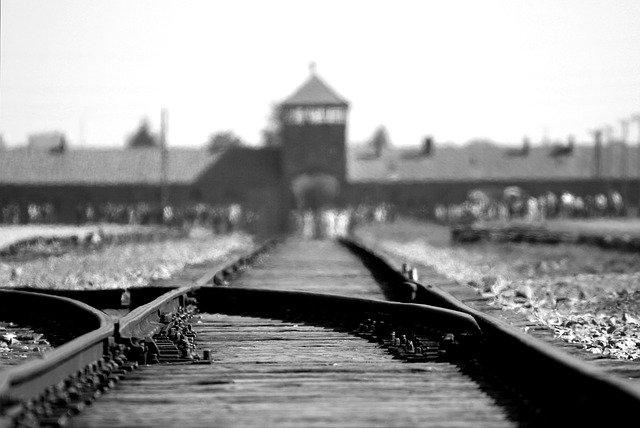
Hitler's Prophecy - Endlösung vs. Holocaust

Af Dr. Christian Lindtner

June/July 2011 

What has, after many years of research and reflection, become obvious to my mind, may come as a shock to many, namely, that orthodox professors of theology - not to speak of average Christian believers - have something strikingly fundamental in common with prominent professors and exponents of so-called Holocaust denial.

The latter claim, in brief, that there is no solid evidence to support the widely held view that Hitler ordered the physical extermination of the Jews, their Vernichtung. It simply did not happen! The former claim that there is, unquestionably, sufficient evidence, internal as well as external, to support the widely held belief that Jesus, called Christ, was indeed, a historical person.

What both parties - otherwise, perhaps,  so unlike one another - share alike is a deep reluctance to face simple historical facts, and, consequently, a strong tendency to ignore or, if that cannot be done with impunity, to distort the evidence provided by available primary sources.

We are, in either case, dealing with myth as opposed to history: Just as it is a myth that the so-called Holocaust is a myth, thus it is a myth that Jesus called Christ is not a myth.

This is my claim, and it is, of course, open to debate.

So-called Holocaust deniers - who prefer to call themselves revisionists - claim that Hitler, in the end, only wanted to deport the Jews to the East, and that it is a huge lie, a hoax, a myth that there was a Hitler order, a plan, a budget or any weapons (e.g. gas vans or gas chambers) designed for the mass extermination of the Jews, 1941-1945.

These claims are, frankly speaking,  based either on ignorance of extant  German sources, or on obvious distortions of well-known and  reliable German documents that cannot, if one is honest,  just be ignored and discarded. From the well-known fact that there are, certainly, many false witnesses and dubious documents, Holocaust deniers triumphantly tend to jump to the general conclusion that the Holocaust as a whole is a myth.

Already on the very first days of Barbarossa, 22 June 1941, German police units from Tilsit and Memel executed some 526 civilians, mainly Jews, in three Lithuanian villages close to the German border: Garsden, Krottingen and Polangen. The executions were ordered from Heydrich´s RSHA in Berlin, and took place "auf Befehl des Führers" (Curilla, 2006, p. 140; see also: Der Ulmer Prozess - SS-Einsatzgruppen vor Gericht 1-3 on youtube).

On 1 December  1941, SS-Standartenführer Karl Jäger, Einsatzkommando 3, reported from Kaunas the execution of some 137.346 civilians, nearly all of the victims being Jewish men, women and children:

"Ich kann heute feststellen, dass das Ziel, das Judenproblem für Litauen zu lösen, vom EK 3 erreicht worden ist. In Litauen gibt es keine Juden mehr, ausser den Arbeitsjuden incl. ihrer Familien...".

The final solution of the Jewish problem here means the extermination of Jewish men, women and children. There is no other way to read Jäger´s words. When the news reached him, Hitler was pleased to learn that Lithuania had now become free from Jews, "judenfrei" (24 July 1942, see Picker 1989, p. 456).

Numerous mass executions of Jews are documented almost daily in the reports of the four Einsatzgruppen. One denier claims - without offering any valid reason - that these documents were "manufacted by Moscow" (Butz 1989). In fact, there can be no doubt that the reports were prepared in one of Heydrich´s offices set up in Berlin for that very purpose. Another prominent denier dr. Robert Faurisson claimed, in Tehran, in December 2006, that it was not the task of the Einsatzgruppen to kill the Jews - only to check their ID, make a few arrests, and the like. His claim has no basis in the reality of time and space.

Deniers tend to ignore the fact that the German Ordnungspolizei was also deeply involved in deporting and murdering Jews in the territories occupied by the Germans. In Poland, close to 30,000 members of the Ordnungspolizei participated in the murder of 2.3 million Jews. In the Soviet Union, more than 20,000 members of Daluege´s  Ordnungspolizei - and other units under Himmler - were involved in the murder of more than 2 million Jews. We have the ipsissima words of Himmler, Heydrich, Daluege, Koch, Jeckeln, EichmannHans Friedrich and many others, that this Vernichtung took place on the order of Hitler. How could it be otherwise?

There are several speeches of Hitler to the effect that the Vernichtung would take place, and several speeches of Himmler that it actually did take place. An extract from Himmler´s speech to the Generals in Sonthofen, 21 June 1944, has been quoted below.

Naturally, already from 1942, the Nazis took great pains to remove all traces of their crimes ("Aktion 1005" etc.), and, always good at euphemisms, they likewise availed themselves of a Tarnsprache. This means that there is, today, very little physical evidence available. That evidence of crimes has been destroyed, does, of course, not permit us now to jump to the conclusion that the murders never took place. It would be highly hazardous to conclude from present absence to past non-existence. In the end, it would lead to an absolute denial of the past: What is no longer, never was!

There are, or were, so many good  German witnesses to the existence and to the use of gas vans and gas chambers that one sees no reason for maintaining  that they should all have lied or been mistaken about their past  experience. After all, from the German point of view, gassing was, in many cases, considered more humane and efficient than starvation or execution by shooting. So why not go on with a method of extermination that had worked so well in connection with the Euthanasia program sanctioned in 1939 by Hitler - whose anti-Semitism is so well documented? This was the method of Viktor Brack, and its awful reality has never been denied. It is the natural precursor of all later forms of gassings (beginning with the gas vans of Kulmhof in December 1941).

On 24 April 1943 Himmler said to members of his SS:

"Mit dem Antisemitismus ist es genauso wie mit der Entlausung. Es ist keine Weltanschauungsfrage, dass man die Läuse entfernt. Das ist eine Reinlichkeitsangelegenheit. Genauso ist der Antisemitismus für uns keine Weltanschauungsfrage gewesen, sondern eine Reinlichkeitsangelegenheit, die ja jetzt bald ausgestanden ist." (Bradley F. Smith et al 1974, p. 200).

The Jews are like lice, and they have to be treated like lice - gassed!

One can hardly accuse Hitler and Himmler of not having been frank about their anti-Semitism! In their eyes, the Jews were the most criminal people on this earth - an echo of Seneca´s sceleratissima gens. Hitler had studied the Jewish question in history carefully, and he was adamant.

Again, the deplorable fact that there are so many false witnesses to the gas chambers, does not allow us to infer that the gas vans and chambers are but a gigantic hoax invented by the enemies of Germany.

True, some deniers must be given credit for having spotted out some of the false witnesses who often appear in the mass media.  Sadly, some of them ended up being even more unreliable themselves, e.g. an American professor , when he claimed that the Jews were not at all murdered, but still there at the end of the war. In 1979, he wrote:

"The simplest valid reason for being skeptical about the extermination claim is also the simplest conceivable reason: at the end of the war they were still there" (Butz 1989, p. 318).

If this professor was right, this would mean that more than 30,000 German policemen were wrong! Even Himmler must have been wrong when he admitted in 1944:

"Es ist gut, dass wir die Härte hatten, die Juden in unserem Bereich auszurotten!"

According to the American professor, they were still there! Was HE there?

Deniers tend to focus on the gas chambers of Auschwitz-Birkenau, and have done so for very long. The motivation for this preposterous drive seems to be that if the "battleship Auschwitz" can be torpedoed, then the entire Holocaust fleet goes down along with it. The manifold issue of Vernichtung is thus reduced to a question of gas chambers in one camp, even in one building! They are seldom interested in reconstructing what actually happened - the natural task of a historian.

The numbers of victims in the camps were often exaggerated by Germany´s enemies, for sure, but there is no reason to go on repeating that fact ad nauseam. As Aristotle noted, repetition is the mark of sophistry, or apparent wisdom.

Since they seem to have decided to start out by questioning the gas chambers in Auschwitz-Birkenau, deniers have to face an old problem that they cannot afford merely to ignore. It has to do with the fact that the Germans themselves identified Leichenkeller 1 in Krema II with a Vergasungskeller, a cellar for gassing, for Vergasung. The notorious document is known as NO-4473, Bischoff´s 29 January 1943 letter from Auschwitz to his superior, Kammler, in Berlin. If Vergasung here means gassing of human beings (i.e. Jews), this would have disastrous consequences for deniers claiming that there is no documentation for gas chambers in Auschwitz - the "symbol" or "capital" of the Holocaust.  And so, to rescue their claim, they have to explain Vergasung away - so oder so.

One denier claims that Vergasung, in German, cannot mean gassing of Jews. So he attacks the language. However, there are many German documents where Vergasung is used in that sense. This French denier, to explain himself, then maintains that these Germans (e.g.  Dr. Erhard Wetzel in his famous 25 October 1941 letter) did not really use the German language correctly! The same professor, who forgets to explain why Dr. Wetzel and many other Germans would want to use the German language "not without dishonesty", then claims that the correct German word would have been Gaskeller, but that the Germans never used that word.

But actually the Germans here involved did use that word, Gaskeller, and they used it in the sense of a Vergasungskeller. This can be seen from a note available in the archives of Topf & Söhne in Erfurt, who produced the ovens, the ventilation fans etc. for Krema II, including Leichenkeller 1. Sitting in his office in Erfurt, Fritz Sander on 17 February 1943 received a phone call from his colleague, engineer Karl Schultze, who was then in Auschwitz. Schultze complained that the ventilation (No. 450) for the Gaskeller in Krema II had not yet arrived there. We can be sure, from other documents, that this ventilation was for installment in Leichenkeller 1. After the war, Karl Schultze was interrogated, on 11 March 1948, and admitted that he had been present to see that everything worked well in Krema II during a first  gassing of Jews - i.e. a gassing of human beings in Leichenkeller 1, which must  therefore have served as a Vergasungskeller or Gaskeller. (Schüle, infra.) The Vergasungskeller, the Gaskeller, would not go away. This remained a very serious problem for deniers - perhaps the most serious of them all (see the debate on the net).

In 2000, David Irving made a fool of himself by claiming, first, that the notorious Vergasungskeller (Leichenkeller 1) mentioned in the Nuremberg document, NO-4473, was not at all used for gassing Jews, but "for fumigating objects or cadavers". Judge Gray was puzzled. Faced with the absurd implications of gassing Jews that were already dead and soon to be cremated,  Irving then suddenly shifted to another explanation, even more absurd in its consequences, namely that the Vergasungskeller was intended to serve as "an air raid shelter". It was not difficult for Robert Jan van Pelt to ridicule this hypothesis. Had Irving, moreover, known how German air raid shelters were constructed in those days, he would immediately have seen that Leichenkeller 1 could not possibly have withstood a heavy air raid, the walls and the roof being far too thin for that. In other words: The Leichenkeller would have collapsed and thus become a real Leichenkeller for those seeking shelter therein! Surely, the Leichenkeller was not designed to serve as a trap for the Germans themselves!

The simple conclusion is that Leichenkeller 1 must, as said, have served as a Vergasungskeller or Gaskeller for gassing Jews - Himmler´s "lice". There was not a single member of the SS stationed in Auschwitz who denied this. 

What an irony, therefore, that professor Faurisson, who prides himself of having been, in March 1976, the first to discover and later to publish the blueprints of Krema II with Leichenkeller 1, is also famous for demanding: Show me or draw me a Nazi gas chamber! Our French professor has the drawing in his own hands, and he has had it all along!

He is asking from others what he himself already has! Many years later, Professor Faurisson came back to Leichenkeller 1. This was on his so-called Official Blog, dated January 4, 2011, where he praised poor Fred Leuchter and his 1988 Report - forgetting, however, to remind us that it was now outdated (see Achim Trunk in Morsch 2011, infra). The French professor concluded:

"The plans showed that the place which, according to what we are told, housed a homicidal gas chamber (,) contained instead a simple depository, with the characteristic dimensions and layout for the keeping of corpses awaiting cremation."

So now, after so many years, the Leichenkeller was simply - a Leichenkeller, a morgue. But what about the fact that Bischoff had called it a Vergasungskeller, and that Sander and Schultze had called it a Gaskeller? What Bischoff, Sander, Schultze, Ertl, Höss and many, many other primary witnesses had told us, was simply IGNORED in 2011 by Faurisson who many years ago distorted or ignored the meaning of the terms Vergasungskeller or Gaskeller. So the method of professor Faurisson is, to be precise, to ignore or to distort the evidence.

One is reminded of the Buddhist philosopher, who wrote:

"You are like a man on horseback, who forgets all about the horse!"

Likewise, when the French professor demands a written order from Hitler. He must know, that there is no written Hitler order - all scholars admit that, just as they have admitted that there is little or no physical evidence for the gas chambers. So why keep on asking for what all know is no longer there?  To repeat: The fact that there is now no written order, does not imply that there never was an oral order. Nevertheless, the tricky professor wants us to jump to that erroneous conclusion. What about the snowman of winters past - no longer here in summer? Was he never there?Faurisson´s insistent - even aggressive - demand for tangible evidence here and now of a written Hitler order is perfidious, for it flatly - and deliberately - ignores the simple and well-known fact that many orders from Hitler were given orally.

What about Faurisson´s other arguments - are they any better? He keeps on asking, for instance, for ONE proof that the Holocaust happened, just one proof, not two, or many. When asked for a definition of the term "proof", he answers that it is up to his opponent to define or decide what is meant by a proof. Very well, then: Since he does not say that he is prepared to accept ANY proof that his opponent may prefer, one may, to be on the safe side, choose what he himself considers a proof. Thus, in an interview that he gave in Teheran 13 December 2011, he argued that there was no order to kill the Jews. The proof, he said, was e.g. that there are cases, where SS-men were severely punished for having killed Jews. In other words: Had there been an order to kill the Jews, these SS-men would not have been severely punished for doing so. The truth, however, is that SS-men were severely punished NOT merely for killing Jews, BUT for doing so in a hateful and gruesome manner below the dignity of a German SS-man, as in the well-known case of Max Täubner (Klee 1988, pp. 187-188). A distorted argument is, in other words, what he himself considers a proof.

Or take the argument that if there are no holes (in the roof of Leichenkeller 1), there is (or was) no Holocaust. Here, the apparent lack of visible holes is offered as a proof of the thesis of there being no Holocaust. The thesis and the argument given as proof are not conclusive. First of all, we are not told why the Holocaust is limited to events that may have taken place in a cellar in Auschwitz-Birkenau. The fact that there may be problems with the roof of Leichenkeller 1 does not imply that e.g. the shootings and the gassings in Kulmhof of Jews did not take place! Moreover, we are not told enough about the holes. It may be that they are not to be seen there now, but does that mean that they never were there? We are not told. It is also unclear whether we are dealing with a statement, or with a question, or whose statement it really is. And yet, the French professor often prides himself of being "precise", of wanting to be "exact"! However, one is often not at all sure what he actually means. So when we look at what the author himself understands by a "proof" - we are left in the dark.

Again, when he claims that it was not the task of the Einsatzgruppen to kill the Jews, he gives no reason for this statement, which, as said, is contradicted by evidence. Like other deniers, he suggests that Babi Yar may be a myth. The awful photographs taken by Johannes Hähle on the spot in September/ October at Babi Yar and Lubny have another story to tell, however.

But let us not forget the holes- allegedly the strongest argument of some deniers, and still a stumbling block to some of their opponents?! How, then, are we to deal with the missing holes, that must once have been there? It has been suggested (e.g. by Robert Jan van Pelt) that they were filled in by the Germans, so as to make them invisible. But clearly it is impossible to do so without leaving any visible trace from the new concrete. Filling in the holes would thus only make them even more conspicuously visible! Alternatively, it has been claimed that the location of the holes has now been identified by computer analysis. That, again, makes no sense, for in that case one would have to verify the location independently - which cannot be done. The existence has to be established before the location can be determined. Bad arguments sometimes lead to counterarguments that are even worse!

So how are we to solve the problem of the holes? Having discussed the matter with a few friends who have experience with regard to the blowing up of concrete, there seems to be a simple explanation. The blow from an explosion starting from within the building would immediately seek the weak spots in the concrete so as to "escape", and the weakest spots would be the holes. The holes would simply be the first "victims" to be blown away, leaving no trace behind. It would, therefore, not make sense to look for the holes - i.e. the edges of the former holes - now in the ruins. In other words: As usual, Faurisson starts out from the wrong premises to reach the conclusion he has decided upon from the start. He ought to have explained how the blow of the explosion could have left the edges of the holes intact. He failed to do so. Hence his argument is not valid.

Conclusion: The author has shown himself to be a quibbler, with no interest at all in finding out what actually happened. The premises of his arguments are, as a rule, unclear, false or uncertain, and the conclusions, therefore, uncertain or wrong.

The reader who is familiar with the book of the famous Austrian prophet and "fanatical anti-Semite" cannot help being reminded of what Hitler wrote about Jewish dialectics in Mein Kampf. Hitler´s conclusion applies nicely to the deniers:

"Man wusste nicht, was man mehr bestaunen sollte, ihre Zungenfertigkeit, oder ihre Kunst der Lüge" (Hitler 1943,  p. 67).

But why waste all these words on mere ignorance and distortion and chutzpah! In the end, one only needs to listen carefully to Himmler´s own words. Reichsführer-SS, to the Generals in Sonthofen, 21 June, 1944:

"Eine andere grosse Frage war noch notwendig zu lösen. Es war die furchtbarste Aufgabe und der furchbarste Auftrag, den eine Organisation bekommen konnte: der Auftrag, die Judenfrage zu lösen. Ich darf dies auch in diesem Kreis wieder in aller Offenheit mit ein paar Sätzen sagen. Es ist gut, dass wir die Härte hatten, die Juden in unserem Bereich auszurotten. Fragen Sie nicht, wie schwer das war, sonderen haben Sie als Soldaten - ich möchte fast sagen - Verständnis dafür, wie schwer ein solcher Befehl durchzuführen ist (...) Ebenso will ich auch eine Frage, die sicherlich gedacht wird, gleich beantworten. Die Frage heisst: Ja, wissen Sie, dass Sie die erwachsenen Juden umbringen, das verstehe ich, aber  die Frauen und Kinder...?" (Bradley F. Smith et al. 1974, pp. 203-204).

The speech is authentic, and the meaning unequivocally clear. Himmler refers to the past, not to the future. It is a statement of fact. The SS has, as an organisation, fulfilled the horrible task of solving the Jewish problem by murdering Jewish men, women and children. It was difficult thing, but also a good thing. Himmler´s words - here as elsewhere - confirm that Hitler´s prophecies were not merely empty words.

It is impossible to argue that Himmler here is a jester or a liar. The truth of his words is supported by an enormous mass of independent documentary evidence, provided, above all, by statements of his own men, members of the SS, the Einsatzgruppen and the Ordnungspolizei etc.

Himmler is not merely speaking of Jews as partisans - as documented e.g. by the Kaunas report of Karl Jäger, 1 December 1941 (see Wette, infra). In this case, deniers - wisely - refrain from attempting to distort Himmler´s own plain words. Having no other option, they simply ignore them, and they are forced to do so in order to uphold their basic (but baseless) thesis that there was no order, no plan, no budget and no mass murder of the Jews etc. Thus, they exclude themselves from the society of honest and open-minded historians. At the same time, some of them complain that their right to "freedom of speech" has been taken from them! The truth is that they are depriving themselves of their own rights.

The works of prominent Holocaust deniers are, to sum up, not only full of distortions and ignorance, but also of ad hominem attacks, tedious repetitions and other kinds of quibble or pilpul. It is no doubt true that the lingua mendax et dolosa of Holocaust denial stands out as a practical problem. The irresponsibility of prominent deniers has caused much public confusion and many a personal tragedy. It is, in the  final analysis, a modern form of sophistry and superstition.

In my view, ignorance and superstition should not merely be ignored or condemned. Nor should it be exploited, as is too often the case. The reasons for ignorance and superstition may be very difficult to spot, but they are there, somewhere, and they have to be identified. Failure to do so is bound to have fatal consequences, sooner or later. It is a sad fact, that incompetent historians have often failed to spot out the errors of the deniers. Deniers should be refuted - not condemned or imprisoned. I see no other way out of dangerous myths and superstitions than the old and narrow path  of higher education and enlightenment. In the long run the old Sanskrit adage still applies: satyam eva jâyate -  Truth will prevail - in the end.

Perhaps, before I conclude, I may quote Wolfgang Curilla, who, in 2011, summarized his own meticulous  investigations concerning the Ordnungspolizei in Poland only:

"Die deutsche Ordnungspolizei wirkte bei der Durchführung des Judenmords in Polen in unvorstellbarem Masse mit. Etwa 30.000 Polizisten waren für den Tod von weit mehr als 2,3 Millionen Menschen jüdischer Herkunft mitverantwortlich."

How can an America professor then claim that "at the end of the war they were still there"? Are we perhaps faced with a modern variant of the legend of the Lord´s Resurrection from the empty tomb?

In my video presentation Hitler's Prophecy, I suggest that a sharp distinction be drawn between, on the one hand, Vernichtung or Endlösung, the German terms, and, on the other hand, the modern term, introduced after the war, Holocaust, an old  Biblical term.

The latter includes many features not present in the former, on which it is based. To some extent, Holocaust is an interpretation and exploitation of the Endlösung. Unlike other cases of mass killings, Holocaust has become a sort of modern secular world religion. This development can be compared to, on the one hand, ancient "holy scriptures", and, on the other, to the world religions and institutions that have developed on that basis.

As in the case of Holocaust denial, deception and ignorance is involved. Of course, one should study, understand and learn from the Vernichtung of the Jews - and many other groups who suffered during and after many wars. And there is certainly much to learn from such studies.

To learn from the past, however, is not at all the same as exploiting the past, for this or that purpose. Holocaust is, so to speak, the commercial version of Endlösung.

References 

Evidence for a Hitler order, for a Himmler order, for mass extermination of Jews, for gas vans and gas chambers, for the removal of the physical evidence of the crimes ("Aktion 1005"), for a refutation of the superficial report of Leuchter, etc. is provided e.g. by the most recent  recent works published mainly by modern German  scholars.

Books

Ilja Altmann, Opfer des Hasses. Der Holocaust in der UdSSR 1941-1945. Gleichen 2008.

Andrej Angrick, Besatzungspolitik und Massenmord. Die Einsatzgruppe D in der südlichen Sowjetunion 1941-1943. Hamburg 2003.

Wolfgang Benz & Brigitte Mihok (Hg.), Holocaust an der Peripherie. Judenpolitik und Judenmord in Rumänien und Transnistrien 1940-1944. Berlin 2009.

Richard Breitman, Heinrich Himmler. Der Architekt der "Endlösung". Zürich, München 2000.

Christopher Browning, Die Entfesslung der "Endlösung". Nationalsozialistische Judenpolitik 1939-1942. München 2003.

Alan Bullock, Hitler and Stalin. Parallel lives. New York 1992.

Arthur R. Butz, The Hoax of the Twentieth Century. Costa Meza 1989.

Wolfgang Curilla, Die deutsche Ordnungspolizei und der Holocaust im Baltikum und in Weissrussland 1941-1944. Paderborn, München, Wien, Zürich 2006.

Wolfgang Curilla, Der Judenmord in Polen und die deutsche Ordnungspolizei 1939-1945, Paderborn, München, Wien, Zürich 2011.

Günther Deschnes, Reinhard Heydrich. Statthalter der totalen Macht. Esslingen am Neckar 1977. 

Joachim C. Fest, Hitler. Eine Biographie. Frankfurt a. M. 1973.

Michael Foedrowitz, Bunkerwelten. Luftschutzanlagen in Norddeutschland. Berlin 1998.

Saul Friedländer, Die Jahre der Vernichtung. Das Dritte Reich und die Juden 1939-1945. München 2006.

Ernst Gauss (Ed.), Dissecting the Holocaust. Capshaw, Alabama 2000.

Alfred Gottwaldt & Diana Schulle, Die "Judendeportationen" aus dem Deutschen Reich 1941-1945. Eine kommentierte Chronologie. Wiesbaden 2005.

Hannes Heer & Klaus Naumann (Hg.), Vernichtungskrieg. Verbrechen der Wehrmacht 1941 bis 1944. Hamburg 1995.

Ulrich Herbert, Best. Biographische Studien über Radikalismus, Weltanschauung und Vernuft 1903-1989. Bonn 1996.

Adolf Hitler, Mein Kampf. München 1943.

Heinz Höhne, Der Orden unter dem Totenkopf. Die Geschichte der SS. München 1984.

Hans Jansen, Der Madagaskar Plan. München 1997.

Ernst Klee & Willi Dressen & Volker Riess, "Schöne Zeiten". Judenmord aus der Sicht der Täter und Gaffer. Frankfurt a. M. 1988.

Ernst Klee (Hg.), Dokumente zur "Euthanasie". Frankfurt am Main 1985.

Helmut Krausnick & Hans-Heinrich Wilhelm, Die Truppe des Weltanschauungskrieges. Die Einsatzgruppen der Sicherheitspolizei und des SD 1938-1942. Stuttgart 1981.

Peter Longerich (Hrsg.), Die Ermordung der europäischen Juden. Eine umfassende Dokumentation des Holocaust 1941-1945. München & Zürich 1990.

Peter Longerich, Heinrich Himmler. Biographie. München 2008.

Günter Morsch & Bertrand Perz (Hrsg.), Neue Studien zu nationalsozialistischen Massentötungen durch Giftgas. Historische Bedeutung, technische Entwicklung, revisionistische Leugnung. Berlin 2011.

Ernst Nolte, Streitpunkte. Heutige und künftige Kontroversen um den Nationalsozialismus. Frankfurt/Main 1993.

Richard Overy, Verhöre. Die NS-Elite in den Händen der Alliierten 1945. München 2002.

Henry Picker, Hitlers Tischgespräche. Berlin 1989.

Richard Rhodes, Die deutschen Mörder. Die SS-Einsatzgruppen und der Holocaust. Bergisch Gladbach 2004.

Adalbert Rückerl, NS-Vernichtungslager. Im Spiegel deutscher Strafprozesse. München 1977.

Dieter Schenk, Der Lemberger Professorenmord und der Holocaust in Ostgalizien. Bonn 2007.

Annegret Schüle, Industrie und Holocaust, Topf und Söhne. Die Ofenbauer von Auschwitz. Göttingen 2010.

Bradley F. Smith et al, Himmler Geheimreden 1933 bis 1945 und andere Ansprachen. Berlin 1974.

Robert Jan van Pelt & Debórah Dwork, Auschwitz. Von 1270 bis heute. Zürich, München 1998.

Robert Jan van Pelt, The Case for Auschwitz. Evidence from the Irving Trail. Bloomington & Indianapolis 2002.

Wolfram Wette, Karl Jäger. Mörder der litauischen Juden. Frankfurt am Main 2011.

Michael Wildt, Generation des Unbedingten. Das Führungskorps des Reichsicherheitshauptamtes. Hamburg 2002. 

Website

Massimo Arico, www.ordnungspolizei.org

Postscript: Denial is Chutzpah

In response to two letters of mine, addressed to Dr Fredrick Toben in Australia, Mr. Jürgen Graf (JG) published, on 22 July 2011, a "letter of contempt" entitled "The moral and intellectual bankruptcy of a scholar: Dr. Christian Lindtner and Holocaust Revisionism". JG takes up ten points that I have for the most part already dealt with above.

Reading his open letter, I understand that my "moral and intellectual bankruptcy" has to do with the fact that most of  my research depends on the scientific work produced by German scholars such as Wolfgang Curilla, Krausnick & Wilhelm (1981), and many others (see my Bibliography above for details).

It is quite true that I "stand on the shoulders of German scholarship" - in this field as in other fields of research. All Danish scholars of "the old school" would agree that when it comes to the study of ancient religions, languages, philology, theology, history etc., Danish scholars do, indeed, stand on the shoulders of their German colleagues. This does not mean that Danish scholars consider themselves unable to come up with their own independent contributions to scientific progress; many Danish scholars (Rask, N.L. Westergaard, Madvig, J.L.Heiberg, Vilh. Thomsen, Frederik Poulsen et al.) have done so, and thus won the respect of their German colleagues. For that reason, they may also feel obliged to defend German colleagues when these are unfairly attacked and, perhaps, not in a position freely to defend themselves - for various historical reasons.

JG admits that he has not read some of these books. Nevertheless, JG does not hesitate to condemn them as the "works of dogmatic and bigoted court historians", who violate "every principle of scientific historiography", etc.

This is totally unfair. Curilla and others base their research on contemporary German police reports, contemporary diaries etc., and on an enormous amount of German witnesses, who were present and who took part in the crimes etc. They deal with these documents in a critical fashion, as one should. In the opinion of JG, however, all this "evidence for the Holocaust was fabricated by West German justice."

All the reports are "suspect from the beginning" etc., according to JG. JG bases his denial on the fact that there are - true - a few cases of false documents and witnesses. He then jumps to the general conclusion that all, or nearly all documents and witnesses are false. Jumping like a ball to general conclusions is not what we expect from a serious scholar.

Faced with German documents that seem to be authentic, JG typically avoids the issue. For instance, when Himmler said to the generals in Sonthofen  in June 1944: "Es ist gut, dass wir die Härte hatten, die Juden in unserem Bereich auszurotten", one expects a fair comment from JG.

Instead, JG reminds us of the fact that not all Jews had been exterminated. Many survived, even the war. This is quite true. But Himmler was speaking of those that had already been exterminated! Did Himmler not know what he was talking about? And what about many other statements from Himmler to the very same effect: The Jews had to be exterminated, and they were exterminated.

Coming to the problem of the Vergasungskeller, or Gaskeller, JG suggest, with Mattogno, that this cellar was to be used for delousing, but the Germans later dropped that project. Here, a normal historian would ask, WHY and WHEN the Germans dropped that project? But most of all, one wants to know what kind of delousing the Germans had in mind before they dropped this project. Did they intend to delouse clothing? Or did they intend to delouse cadavers (dead Jews, as suggested by David Irving)? In any case, the answer is absurd.

By bringing up Babi Yar and Katyn, JG reveals his lack of historical sense. Paul Blobel was the first (in Nuremberg) to question the figure of 33.711 victims, finding it too high; but Blobel never denied the event as such. Present were also, as has recently become known, members of the Polizeibataillon 303, from Bremen. And the mass murder at Babi Yar near Kiev in September 1941 must be seen in the historical context of numerous similar events in the second half of 1941: the murder of the Jews of Lubny in October, the children of Bjelaja-Zerkow in August, the naked women of Libau in December etc. etc. The work of an Italian scholar enables us to follow in the bloody tracks of the German police, day by day, from one place to another, with the purpose of making the land "free from Jews". The proof is largely provided by their own reports (www.ordnungspolizei.org), occasionally confirmed by the independent evidence of local witnesses, in rare cases even photographs.

Katyn is important, not only because it shows, as is well-known by now, that the Soviets were ready to prepare false "scientific reports" of the actual events, but also - and that is to be kept in mind - because the efforts of the Germans demonstrate how sensitive they were to the incriminating evidence provided by mass graves. For that very reason, they gave highest priority to the removal of the traces of their own mass graves. Again, the responsibility for their removal was assigned to Paul Blobel: "Sein Auftrag erhielt absoluten Vorrang vor anderen Aufgaben" (Curilla, 2006, p. 746).

JG also contends  that "Kommando 1005" could not have removed the physical remains of all those bodies, and that "court historians" have failed to account for this. But Curilla (2006, pp. 745-769) has provided careful documentation of the activities, the problems etc. that "Sonderkommando 1005" faced. JG starts counting Jewish teeth, but would it not have been better taste to quote Curilla:

"Die nicht völlig verbrannten Knochenreste wurden mit Stampfern zerkleinert und zusammen mit der Asche im Gelände verstreut." (op. cit., p. 753).

For the same reason it is difficult to satisfy the absurd demands of those who insist on seeing all the dead Jews on the table before they will believe that Hitler and Himmler et al. were speaking the truth.

With some of their own crimes in mind, Generalkommissar Kube, in an 18 June 1943 letter from Riga to Berlin is quoted for asking: "Was ist dagegen Katyn?" Since this letter has been easily available to scholars at least since 1955 (Léon Poliakov & Joseph Wulf, Das Dritte Reich und die Juden. Berlin 1955, p. 192), one wonders why JG ignores it now that he himself has chosen to take up this issue. And Wilhelm Kube, a brutal old National socialist, is also an excellent contemporary witness to numerous other cases of mass murder in Belorussia. These documents cannot possibly have been fabricated by German justice after the war, as JG may wish to insinuate.

JG mentions Erich von dem Bach-Zelewski, but his case is by no means as simple as here presented by JG; see the references in Krausnick & Wilhelm, 1981, p. 671; and ibid., p. 639: "1962 in einem von mehreren gegen ihn angestrengten Verfahren zu lebenslänglichem Zuchthaus verurteilt."- In Nuremberg, on 7 January 1946, v.d. Bach-Zelewski was asked about the murder of 90000 men, as Ohlendorf, commander of Einsatzgruppe D,  had freely admitted a few days earlier. He replied:

"Wenn man jahrelang predigt, jahrzehntelang predigt, dass die slawische Rasse eine Unterrasse ist, dass die Juden überhaupt keine Menschen sind, dann muss es zu einer solchen Explosion kommen."

This argument makes good sense, and it reflects the views of Hitler and Himmler. It reflects what actually happened. For Hitler, even the most severe punishment of the Jews was too mild. Goebbels in his diary, 27 April 1942:

"Die Juden haben unserem Erdteil soviel Leid zugefügt, dass die härteste Strafe, die man über sie verhängen kann, immer noch zu milde ist..."

On 27 March 1942, Goebbels had noted what happened to the Jews in the East:

"Es wird hier hier ein ziemlich barbarisches und nicht näher zu beschreibendes Verfahren angewandt, und von den Juden selbst bleibt nicht mehr viel übrig. Im grossen kann man wohl feststellen, dass 60% davon liquidiert werden müssen, während nur noch 40% in die Arbeit eingesetzt werden können."... "Gott sei Dank haben wir jetzt während des Krieges eine ganze Reihe von Möglichkeiten, die uns im Frieden verwehrt wären. Die müssen wir ausnützen."

Shooting was merely one of the several possible ways of getting rid of the Jews. Goebbels, 16 March 1942:

"Es erweist sich deshalb als notwendig in vermehrten Umfange wieder Juden zu erschiessen."

Hans Frank and many, many others also refer to the shooting of Jews in this period (see e.g. Dieter Schenk, Der Lemberger Professorenmord und der Holocaust in Ostgalizien, passim).

In spite of all this, JG claims claims that there is no German documentation for the murder of Jewish women and children. But, in truth, there are hundreds of documents. Within easy reach is the report of Karl Jäger, 1 December 1941. See the recent book by Wolfram Wette: Karl Jäger. Mörder der litauischen Juden, Frankfurt a. M. 2011. The systematic murder of Jewish men, women and children in Lithuania  started already in July 1941. By 1 December the toll of victims had reached 137.346. Jäger, commander of Einsatzkommando 3 (EG A) wrote:

"Ich kann heute feststellen, dass das Ziel, das Judenproblem für Litauen zu lösen, von EK. 3 erreicht worden ist. In Litauen gibt es keine Juden mehr, ausser den Arbeitsjuden incl. ihrer Familien,...". (Wette, op. cit. p. 243).

Jäger committed suicide in his cell in 1959. He did not deny the crimes in Lithuania, only his own personal responsibility. He put the blame on one of his subordinates, Joachim Hamann, whose name has now become insolubly associated with the notoriously efficient "Rollkommando Hamann". Hamann, an ardent antisemite, took his own life in July 1945. In 1990, to be sure, Professor Robert Faurisson, made a feeble attempt to question Jäger´s report (Ecrits revisionnistes, III, p. 1028): According to Faurisson, it reported the execution of "plusieurs centaines de milliers de juifs " - which is not the case - and "les sources dont il  s´inspire sont inconnues" - which is also not the case (see Wette, op. cit.,  passim).

Faurisson moreover refers to the standard work on the Einsatzgruppen of Krausnick and Wilhelm from 1981. He tells us that it contains 688 pages, which is true (and irrelevant here), but that "les auteurs ne produisent un ordre ou un plan d´extermination des juifs soviétiques" - which is a gross distortion (op. cit., p. 1028). Typically, on the basis of a few insignificant errors, the value of the work of these two eminent German scholars as a whole is flatly  rejected (op. cit.,p. 1029).

The easiest way to "understand" Faurisson´s "method", however, is to revise the list of names given in the fourth volume of his Ecrits revisionnistes, pp. 1955- 1991. If one takes the trouble to  compare this index with the long  lists of names given in the works of Krausnick & Wilhelm, Curilla and many other German scholars, one will see that Faurisson simply ignores scores of important German witnesses to the Endlösung. Instead, he wastes  a lot of paper on entirely insignificant or false witnesses,often  repeating himself by giving names that no normal historian or court would take very serious.

And what about Himmler´s order from July 1941:

"Sämtliche Juden müssen erschossen werden. Judenweiber in die Sümpfe treiben." (Christopher Browning, Die Entfesslung der "Endlösung". Berlin 2006, p. 410).

JG just ignores these contemporary sources. Or Hitler´s own words, 30 January 1942, about the Vernichtung des Judentums:

"Zum erstenmal wird diesmal das echt altjüdische Gesetz anwendet: "Aug´ um Aug´, Zahn um Zahn!""

Again, JG ignores contemporary evidence.

And as for  the gas vans, that the Danish Sanskritist had  the "audacity" to mention: Good German evidence of gassing Jews and others in vans and in chambers, in camps and elsewhere, right from 1939, is found in the recent  book edited by  Günter Morsch & Bertrand Perz, Neue Studien zu Nationalsozialistischen Massentötungen durch Giftgas. Berlin 2011. Here, the various false claims to be found in the reports of Leuchter and Rudolf are also debunked. Any serious debate about gassings should, of course, not start with Auschwitz, but with the beginning: the euthanasia program, then Chelmno/Kulmhof etc. - Why in the world would there be gassings of Jews and others  in so many other places - but not in Auschwitz-Birkenau?

To sum up: Jürgen Graf´s "letter of contempt" confirms what I have already concluded above about the method of deniers: The trick is simply to  ignore or distort the evidence available. You slander scholars who stick to the available evidence and to the historical context. Compared to a giant like Hilberg, who, like all scholars, made errors,  JG turns out to be a dwarf.

So it seems fair to conclude, as I did, that "Denial is Chutzpah".

What about Mr Graf himself? Graf has a rare command of many languages, to my ear he even speaks Danish admirably well. He is a prolific writer and translator. He fights for his beliefs.  As such, he probably deserves credit for having removed many popular misconceptions about the Holocaust. It is a sad truth that competent scholars, fearing public exposure, perhaps, often fail to take steps to correct popular misconceptions that flourish  in the media. .  With all his abilities, it is a great pity that Graf has little or no training as a scholar.  For serious scholarship he only has contempt, as a dilettant often has.

Most of all, however, JG reminds us of a Christian fundamentalist. No rational argument will persuade such Biblical fundamentalists to admit that the earth is not in the center of the universe, or that Jesus is not sitting up there on a cloud just waiting for the right moment to fly down followed by his apostles to take revenge. It is, perhaps, for that reason, that JG concludes his letter of contempt by confessing to the world that he does not endorse my humble views about the Buddhist and Hellenistic origins of early Christianity.

Gott sei Dank!

Dr. Christian Lindtner, 24 July 2011